Transit & Traffic
Getting across London can be the hardest part of your day. The bus does not show up on time. The nearest bus stop is a 20-minute walk away. Travelling by car takes 40 minutes to get across town. The bike route you need to use puts you next to traffic with no protection. There are solutions to these problems. We need to bring them to London.
The Problem
Three specific gaps.
Signals across the city are still timed on fixed schedules that do not respond to what is actually happening on the road.
Neighbourhoods in the north end of Ward 3, including Cedar Hollow and parts of Stoney Creek and Huron Heights, sit outside the reach of the BRT and the main bus routes, which leaves seniors, students, and anyone without a car stranded.
And most of our cycling network is either painted lines on a busy road or disconnected routes that prevent use of the lanes for commuting.
The Solution
Cut wait times at the worst intersections
The federal and provincial dollars for London's smart traffic system are already in, and the equipment is being installed. My plan layers a free tool on top of that called Google's Project Green Light, which reviews signal timing data and recommends changes based on what is actually happening at each intersection. Engineers review the recommendations and choose what to implement. London has not applied. It costs nothing.
Connect the neighbourhoods to the BRT and main bus routes
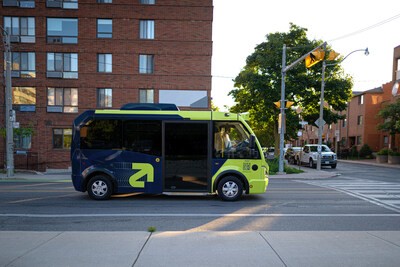
The BRT and the main bus routes only work for people who can get to them. That leaves a lot of Ward 3 out. On-demand transit, booked by app or by phone, fills that gap. A minibus can pick people up in their neighbourhood and drop them off at the closest rapid transit or main bus route stop.
Make cycling a real option for getting around
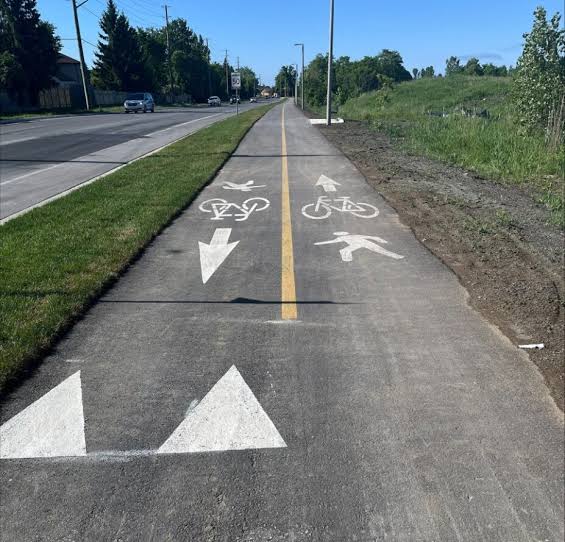
For a lot of Londoners, biking to work, school, or the store would be the obvious choice if the route felt safe. On roads too narrow for a protected bike lane, multi-use paths for cyclists and pedestrians should be the standard approach. Adelaide Street already uses them. Building the network out means cycling becomes an actual way to get around, not just a summer weekend activity.
What This Means For You
If you drive, better-timed signals mean less time sitting through red lights. And every person who takes on-demand transit or rides a bike safely is one less car in the intersection ahead of you.
If you are a senior, a student, someone with a disability, or anyone in Ward 3 without a car, on-demand minibuses give you a way to get to work, to appointments, and to the rest of the city on your own schedule. That is independence.
If you bike, a network of multi-use paths and safer routes means cycling becomes a way to get to work, school, and the store without a car.
A Proven Model
- •Quebec City joined Google's Project Green Light in 2025 and saw up to 30 percent fewer stops at the intersections they tuned.
- •Boston expanded from a pilot to 114 intersections across 20 neighbourhoods in 2025, reporting up to 33 percent fewer unnecessary stops at tuned intersections.
- •Belleville replaced its evening fixed-route buses with on-demand transit. Nighttime ridership rose 300 percent. Bus mileage dropped 30 percent. More than fifteen Canadian cities have adopted the model since.
My Proposal
- •Apply for Google's Project Green Light. It is free and it works in Canada.
- •Bring on-demand minibus service to Cedar Hollow, Stoney Creek, Huron Heights, and the other neighbourhoods in the north end of Ward 3 where the BRT and main routes do not reach, or where a smaller vehicle would fit neighbourhood streets better than a full-sized bus.
- •Build the multi-use path network out across the ward, so cycling connects to places people actually need to go, without taking capacity from the main roads that drivers depend on.