Infrastructure: Fix It Before It Breaks
The Problem
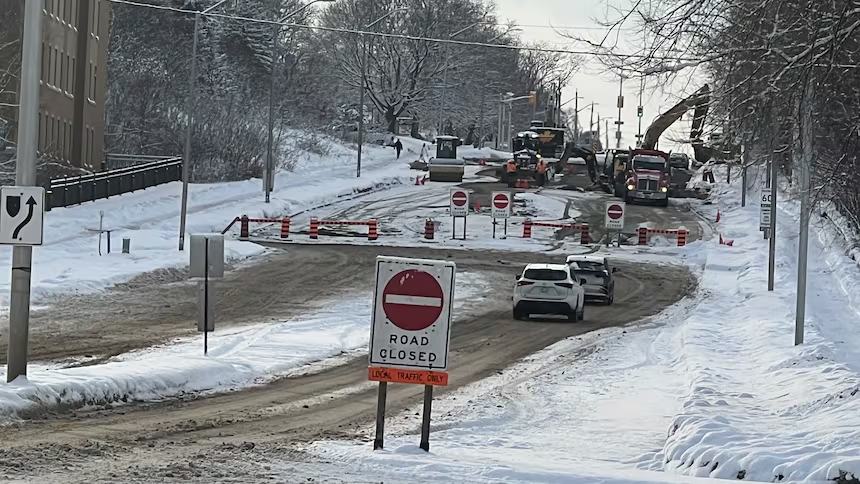
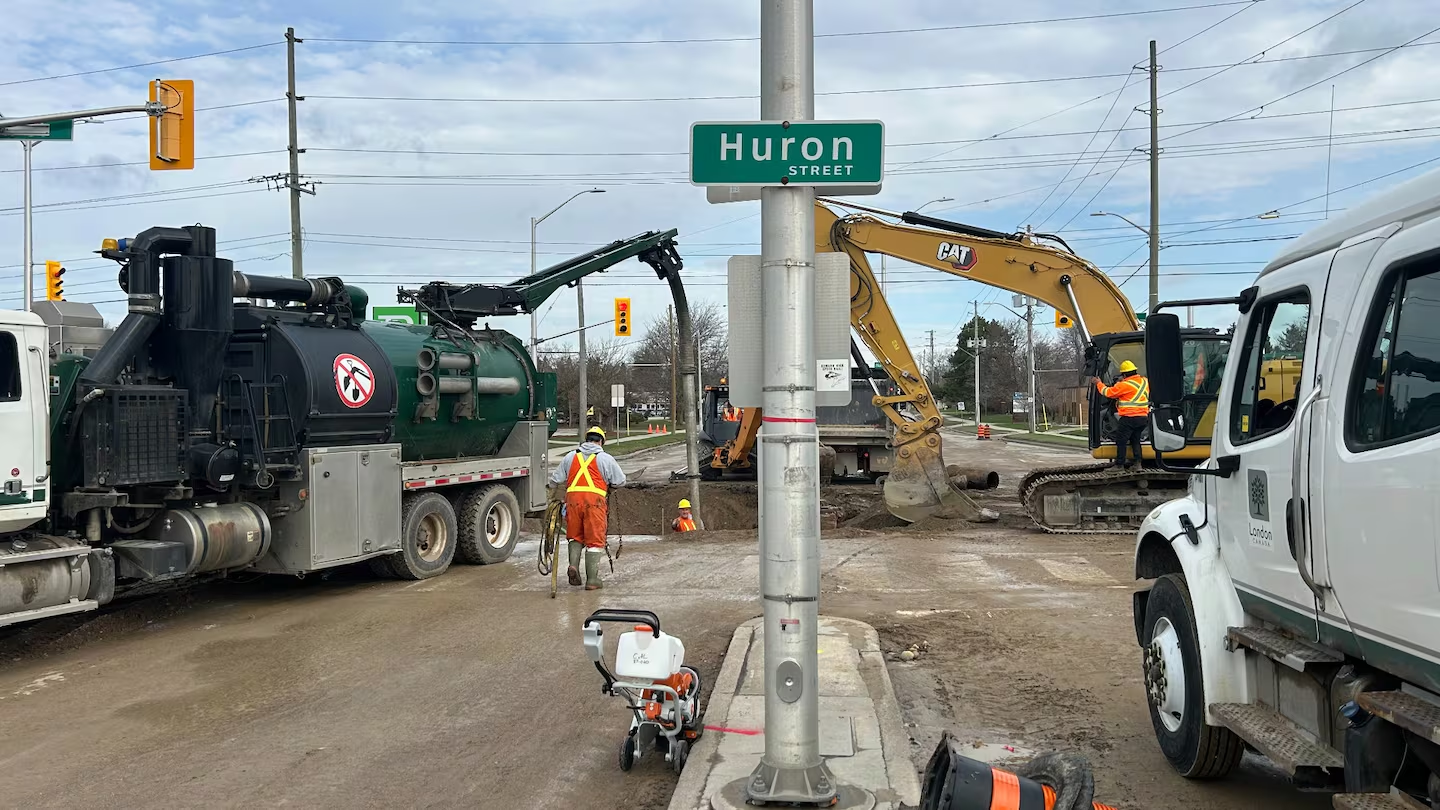
Two major water main failures on Highbury Avenue in four months. Highbury Avenue between Fuller and Kilally in December, a cast iron pipe from 1949. Highbury and Huron in April. Both were surprises. Both shut down a busy intersection for days. London still uses a “wait until it breaks” approach to roads and water mains. It’s the most expensive way to handle infrastructure. Emergency repairs cost far more than planned ones. We are paying a premium to wait for things to break. That has to change.
The Solution: Smarter Tools for City Staff
Above ground.
As City vehicles or City buses drive their normal routes, the AI-powered cameras automatically flag potholes, faded street lines, cracks, and damaged signs.
Below ground.
A two-step approach. First, predictive software ranks every pipe by how likely it is to fail. Kitchener already does this. Then ground-penetrating radar confirms the actual condition of the highest-risk pipes before we dig. Predictive software tells us where to look. Radar tells us what’s there. The City stops guessing.
Isn’t London already doing this?
London meets the provincial requirement. The City has an asset management plan and grades pipe condition from age, material, and break history. That is estimation, not measurement. Kitchener has gone further with predictive modeling. We can too, and then confirm the highest-risk pipes with radar before we dig.
Good Jobs. In London. Done In-House.
The radar work gets done by London staff, not outside contractors. We train and hire locally. That means skilled, good-paying jobs that stay here. The knowledge stays with the City.
A Proven Model
What This Means for Londoners
For drivers:
- •Fewer surprise road closures on your daily route.
Affected Londoners:
- •Fewer basements flooded by a main you didn’t know was failing. Fewer emergency assessments on your street.
- •Fewer incidents of disruption to water supply to your home or apartment.
For taxpayers:
- •A planned repair costs a fraction of an emergency repair. The savings on overtime, flooded basements, and detoured traffic pay for the program itself.
For city staff:
- •Better tools to deliver more effective service. Training and skills that stay in-house.
My Proposal
- •Start a road-scanning pilot. Put AI cameras on a small group of City vehicles and buses to scan roads during their normal routes.
- •Roll out predictive software for our water mains, using the same models Kitchener has already proven.
- •Add ground-penetrating radar surveys on the highest-risk streets before we dig. Train and hire London staff to do the work.
- •Fund it with senior level government grants, not tax hikes. Ottawa and Queen’s Park already put money on the table for this kind of work. We go after it.
Catch the problem before it becomes an expensive emergency.