Housing & Affordable Homeownership

Whether you are one month from losing your home, without a roof over your head, stuck on a rental waitlist, or trying to buy your first place, the need underneath is the same. You need somewhere to live that you can afford.
The Problem
Rent is climbing faster than paycheques. Building a down payment has become a challenge as home prices continue to climb, and the seniors who want to downsize have nowhere reasonable to go.
The Solution
One plan with four paths, so that wherever someone is on the housing spectrum, there is a next step that actually applies to them. Every path can use federal and provincial dollars that are already set aside for housing, layered with city tools and community partnerships.
Path 0. Stay Housed
Keeping someone from losing their home in the first place costs the least and does the most for the person it reaches. It maintains their dignity and keeps families in the neighbourhoods they already belong to.
Fund prevention like infrastructure. The Rent Bank/subsidy and local food banks become a standardized budget line that grows when local unemployment and inflation rise. When federal grants open for food banks, City staff support London's food banks in their applications to ensure funding comes to London.
Catch people early. Partner with London Hydro so customers falling behind get help and referrals right in their bill.
Protect the apartments we already have. When an older, affordable apartment building is sold, rents often jump and tenants can be pushed out. I will push Council to approve a list of local non-profits that can buy these buildings. Federal loans, including the forgivable portions, are now available to help non-profits cover the purchase and repairs, along with a mortgage. And the building will pay its property taxes.
Path 1. A Place to Start Over
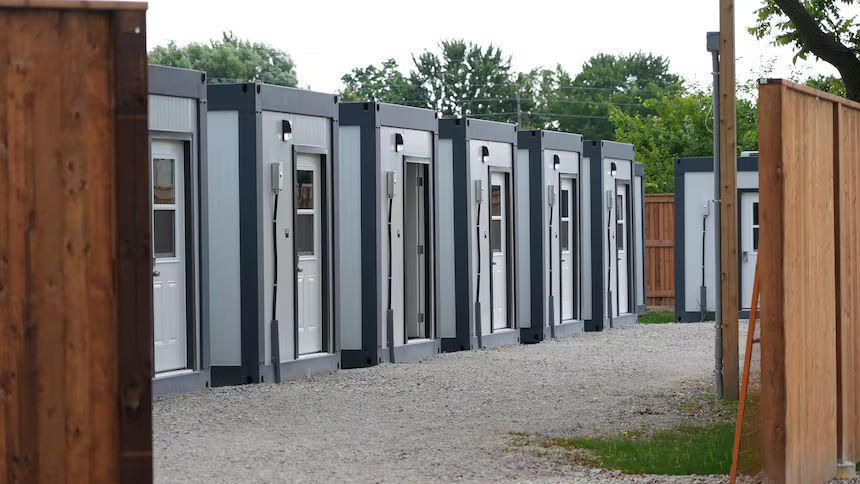
Keep London's micro shelter program running, but restructure it cost-effectively into two separate communities that do different jobs.
The first is for people who have lost their homes in the last two years and are trying to rebuild. That means living wage job training where it applies, financial literacy support, an individualized plan for success and purpose, a support worker, and a portion of their shelter allowance saved toward first and last month's rent when they are ready to move on.
The second shelter community is for people in crisis, with on-site triage, mental health support, and medical care. Clinical staff would be paid through provincial health funding while the person is stabilized and prepared for a supportive housing placement.
Both communities are pointed at the same outcome, which is getting people back into housing they can hold onto and back in control of their life.
Path 2. A Place to Rent
Two pieces here.
The Landlord Partnership
A lot of small landlords in London would rent to someone getting back on their feet if they were not worried about the risk. The proposed Landlord Partnership takes that risk off the table. A Rent Continuity Guarantee covers disruptions in monthly rent up to a defined fund limit. The Property Guarantee of up to ten thousand dollars covers unexpected damage or unpaid rent. And a legal and casework backing piece provides dedicated funding for Landlord and Tenant Board mediation costs, along with a year of on-call caseworker support for the tenant.
Landlords say yes, tenants get housed, and the city comes out ahead of what a full rehousing cycle would have cost.
The Landlord Partnership would be matched to tenants coming out of the micro shelter program who are ready for stable rental, or to others most likely to succeed in the placement. The partnership has to work for both parties.
More mixed-income rental buildings across the city
London needs more buildings where deeply affordable, affordable, and market-rate apartments sit under one roof. Not concentrated in one neighbourhood, not built as a project on the edge of town, but spread across the city so every part of London carries a share of the responsibility.
The tools to encourage this already exist. Density bonuses from senior levels of government, municipal land contributions, and streamlined approvals for non-profit operators. My job at Council would be to use these levers consistently, not case by case.
Path 3. A Path to Owning
For Londoners who are ready to buy but priced out of the current market, three pieces.
Community Land Trust Housing

A community of well-designed, energy-efficient, Little Homes would be a neighbourhood built on land that is held permanently by a non-profit operator. The land stays in the trust, but the buyer owns the home outright and builds real equity in it: A combination of mortgage paydown and accepted home improvements plus a portion of traditional market appreciation. When they sell, a resale formula keeps the home affordable for the next family who needs it.
Whitehorse has been doing this for years, selling homes more than thirty percent below market. Chatham-Kent's Brickworks Community Land Trust is the closest example in Ontario. This is not a new idea. It is just a new one for London.
Down payment forgivable loan program
London already has a small municipal down payment loan program for first-time buyers, and it works. My proposal is to protect it, expand it, and continue to make sure it is forgivable over time if the buyer stays in the home they have bought.
Rent Plus Equity
Rent Plus Equity is offered inside non-profit mixed-income buildings for renters who want a path into ownership. You pay market rent for your apartment, and a portion of what you pay goes into a trust account that belongs to you. When you are ready to buy a home, anywhere in London, that trust account becomes your down payment.
This is not rent-to-own. You are not buying the apartment you are living in, and if you move across town, the trust account moves with you.
What This Means For You
If you already own your home, this plan does not touch your property taxes, and it gives your kids and grandkids a real chance to afford to stay in the city they grew up in. Neighbourhoods stay stable. No sprawl added. Better use of infrastructure without high density buildings. It's an investment in London and future Londoners.
If you are just starting out, or you graduated into a rental market that seems to have no exit, Rent Plus Equity gives you a way to turn a portion of what you are already paying into a down payment. Little Homes on Community Land Trust land makes ownership actually reachable. A small mortgage means more money each month for a better quality of life and even more saving for the traditional real estate market if you choose.
If you are a senior thinking about downsizing, the plan gives you an option that lets you stay in London, in a home that is easier to maintain, and it frees up a family-sized home for someone who is in the traditional market for one.
And if you are one month from losing everything, the prevention work at the front end of this plan was designed with you in mind, so that you do not have to fall through the cracks before you get assistance.
A Proven Model
- •St. Thomas–Elgin reduced chronic homelessness by 36.7 percent in under a year, using the same federal funding streams and the same kinds of local organizations London already has. Forty-five minutes down the road.
- •Vivacite, a non-profit in Montreal, delivers permanently affordable shared-equity homeownership without ongoing public subsidy. Market-rate homes cross-subsidize the affordable ones inside the same portfolio.
- •Whitehorse's Community Land Trust is selling homes more than thirty percent below market. That is the mechanism I am proposing for Little Home Communities here.
- •The Champlain Housing Trust in Burlington, Vermont has been keeping homes permanently affordable since 1984. It is now the largest CLT in the United States. Homeowners build real equity, but the home stays affordable for the next family when they sell.
My Proposal
- •Set a public target in the first year for reducing chronic homelessness, so Londoners can see for themselves whether the strategy is working.
- •Fund prevention like infrastructure, with Rent Bank and food banks written into multi-year budget lines that scale with economic conditions.
- •Launch the Landlord Partnership with the Rent Continuity and Property Guarantees, so private landlords have real reason to say yes.
- •Pilot Little Homes and Rent Plus Equity with non-profit partners, using the federal and provincial housing dollars.
- •Tie agency contracts to proof it is working, not activity or output. Housing retention at six and twelve months, return-to-homelessness rates, and prevention savings.